

The next computing race is getting federal money
The U.S. government is making one of its biggest bets yet on quantum computing.
The Trump administration is moving forward with a roughly $2 billion investment across nine quantum computing companies, with the government expected to receive minority equity stakes in several of them. The funding is being routed through the CHIPS and Science Act, the same industrial-policy framework originally passed in 2022 to strengthen domestic semiconductor research and manufacturing. Reuters reported that the package includes $1 billion for a new IBM quantum venture called Anderon, $375 million for GlobalFoundries, and about $100 million each for D-Wave, Rigetti Computing, and Infleqtion.
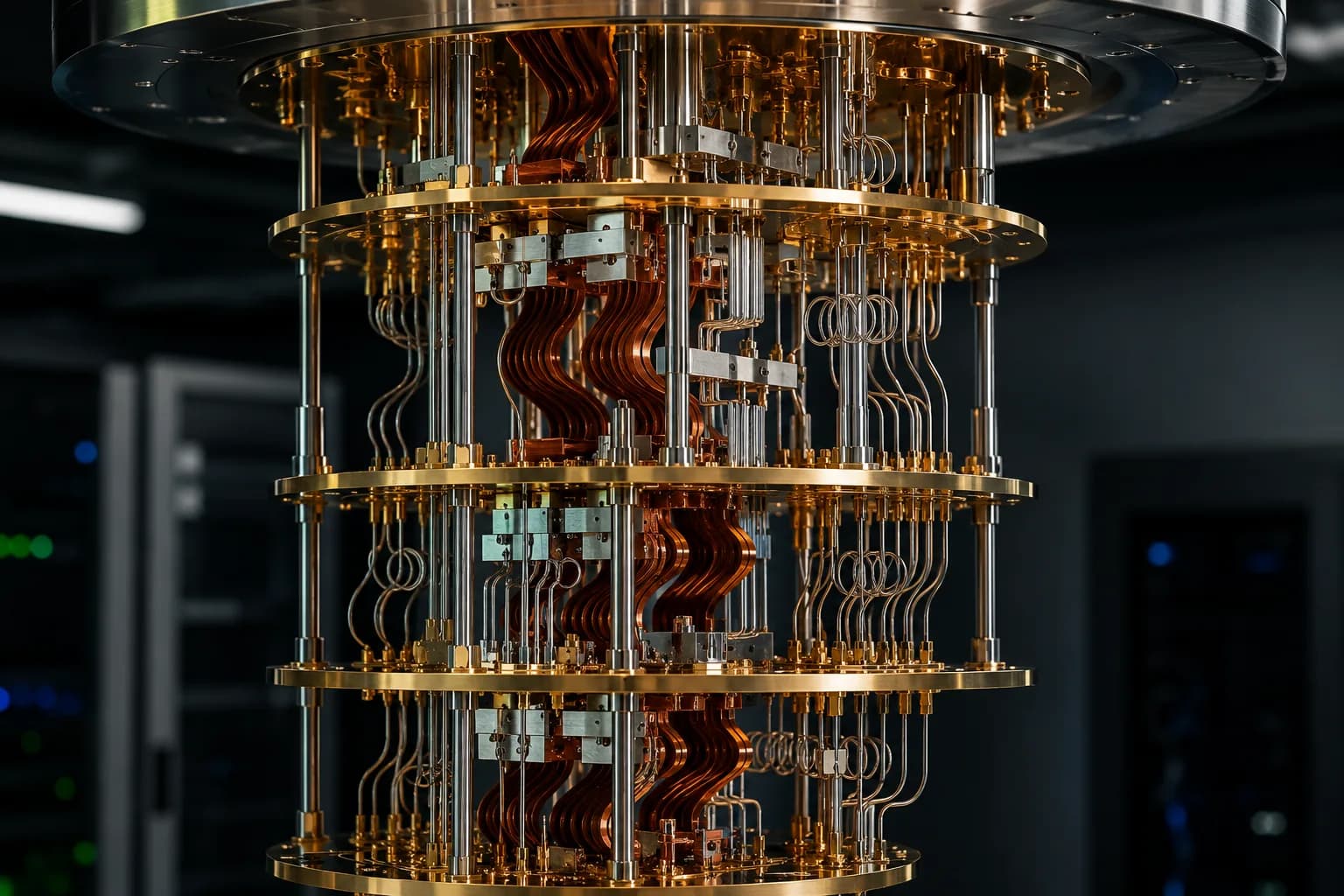
That matters because quantum computing is still not a normal commercial technology. It is not something most companies can buy, deploy, and immediately use like cloud servers or GPUs. It is closer to a long-term infrastructure race: expensive machines, fragile hardware, deep physics, specialized chips, and a very uncertain timeline.
But Washington is treating it like something strategically important anyway.
Why the government cares
Quantum computers are different from classical computers because they use qubits instead of ordinary bits.
A regular bit is either a 0 or a 1. A qubit can represent quantum states that allow it to behave differently from a normal bit, which gives quantum computers the potential to attack certain complex problems in a radically different way. That does not mean quantum computers will replace laptops, phones, or data centers. The more realistic bet is that they could eventually become specialized machines for problems in chemistry, materials science, cryptography, optimization, finance, and defense.
That is why the national-security angle is so strong.
If quantum systems become practical, they could affect everything from drug discovery to secure communications. They could also create risks for encryption systems that protect sensitive data today. For governments, that makes quantum less like a normal startup category and more like a strategic technology stack: chips, manufacturing, research talent, supply chains, and domestic capacity.
The current funding package reflects that mindset. IBM’s planned quantum chip manufacturing venture in Albany, New York, is especially important because quantum computing is not just about software. It requires a hardware ecosystem. GlobalFoundries’ involvement also points to the same theme: the U.S. wants more of the quantum supply chain built domestically, not dependent on foreign manufacturing.
The market reacted fast
Investors noticed immediately.
Public quantum stocks jumped after the news, with companies such as D-Wave and Rigetti moving sharply higher. IBM shares also rose. That reaction makes sense: for early-stage, capital-intensive companies, federal money is not just cash. It is validation.
A government equity stake can signal that a company is part of a national technology priority. It can help with recruiting, investor confidence, partnerships, and long-term planning.
But that does not mean the technology is suddenly mature.
Quantum computing companies still face the same hard technical problems they faced before the funding announcement. The biggest one is error correction. Quantum systems are extremely sensitive to noise, and qubits are difficult to keep stable. Small disturbances can introduce errors, which makes it hard to run long, reliable computations.
That is the gap between a promising quantum demonstration and a commercially useful quantum computer.
The uncomfortable part: nobody agrees on the timeline
The debate around quantum computing is not whether it is interesting. The debate is when, and in what form, it becomes useful.
Nvidia CEO Jensen Huang has been one of the more cautious public voices. He has suggested that practical quantum computing may still be roughly 20 years away. Bill Gates has offered a more optimistic view, saying useful applications could arrive much sooner, potentially within a few years.
That range tells you almost everything about the state of the field.
Quantum computing is real. The research is real. The hardware progress is real. But the timeline is still extremely uncertain.
This is why the government’s investment is both logical and risky. If the U.S. waits until quantum computing is obviously commercial, it may already be behind. But if it invests too aggressively too early, it could end up putting taxpayer money into companies and architectures that never become the winning path.
The builder angle
For internet builders, quantum computing can feel distant. Most people building products today are focused on AI tools, distribution, SaaS workflows, automation, marketplaces, and media. Quantum does not feel like something you can plug into a weekend project.
That is true — for now.
But the reason this story matters is that major technology shifts usually start as infrastructure investments long before they become builder platforms.
Cloud computing was once enterprise infrastructure. GPUs were once mostly associated with graphics and gaming. AI models were once research systems.
Now each of those layers has created massive new builder ecosystems.
Quantum is not there yet. But if it does become useful, it may create entirely new categories of software, security tools, simulation platforms, developer tooling, scientific workflows, and infrastructure companies.
The near-term opportunity is probably not “build a quantum app.” It is watching where the ecosystem forms:
cloud access to quantum processors
developer tools and simulation layers
quantum-safe security products
chip manufacturing and hardware supply chains
education and workflow tools for researchers
enterprise experimentation platforms
That is where early builder opportunity usually appears first: not at the deepest hardware layer, but at the interface between emerging infrastructure and people trying to use it.
The bigger signal
The U.S. government’s quantum bet also says something broader about where technology policy is going.
Washington is no longer only issuing grants and waiting from the sidelines. It is increasingly willing to take direct stakes in companies tied to strategic industries. Reuters noted that this follows other federal moves involving companies in semiconductors and critical minerals.
That is a different model from the old startup story.
Instead of venture capital alone picking winners, the federal government is becoming a more active player in the technology stack: chips, minerals, manufacturing, AI infrastructure, and now quantum.
Whether that is smart or dangerous depends on the execution. Government backing can accelerate important infrastructure. It can also distort markets and reward politically favored companies before the technology is ready.
Both things can be true at the same time.
Bottom line
Quantum computing is still experimental, expensive, and technically difficult.
But the U.S. government is now treating it like a critical national platform.
The $2 billion investment does not mean quantum computers are suddenly ready to change everyday computing. It means the race to control the next generation of computing infrastructure is becoming more serious.
For builders, the lesson is simple: watch the infrastructure layer.
The most important opportunities often appear years before the mainstream market understands them.